
The Wainsgate Graveyard Project has two principal aims: firstly to tell the story of the graveyard at Wainsgate – describe its history and development, transcribe the inscriptions on headstones and other memorials, plot the position of the graves, describe and photograph headstones and other memorials, and record the names of everyone interred or commemorated there.
The other aim is to tell some of the stories behind the names and dates: local people and families: Baptist ministers, Sunday school teachers, people who worshipped at Wainsgate and people who didn’t: men who died in two World Wars: people who moved to the area and people who moved away: mill owners and mill workers. Where did they live, where did they work, what did they do in their leisure time? How did they live and how did they die? They all have stories to tell – the history of a community told through its graveyard.
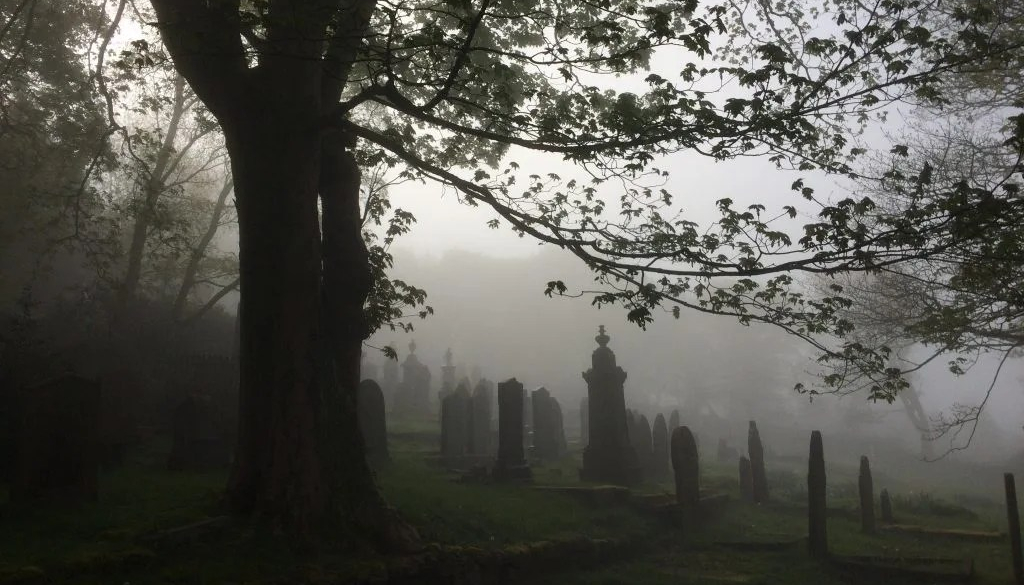
This website also has many diversions and sidetracks, sometimes inspired by the graveyard and the people interred or commemorated there, and sometimes not: local history, social history, natural history, military history, politics, philosophy, theology, art, literature, poetry and music. There’s even a sports page, a few cartoons and a couple of recipes.
As John Reith said of the BBC when he became its first Director-General in 1927, our aim is to:
‘inform, educate and entertain’
(but not necessarily in that order)
The contents of this website will be constantly evolving as we add more information, images and stories. Please contact chris.barnett@wainsgate.co.uk if you have any comments, queries, corrections, additional information, images, documents, stories, memories or anything that adds to our knowledge and understanding of Wainsgate graveyard and the people interred and commemorated there.
‘Quid brevi fortes jaculamur avo Multa?’
‘Why for so short a life tease ourselves with so many projects?’ — Horace, Odes, ii. 16, 17.
* * *
CONTENTS
Click on the LINKS to find out more…..
ABOUT WAINSGATE
A Short History of the Baptist Church at Wainsgate 1750-1950 (downloadable pdf) – What’s Happening at Wainsgate? – The Burial Ground – Support Wainsgate (Donate, Volunteer, Subscribe) – Visit Wainsgate – Acknowledgements.
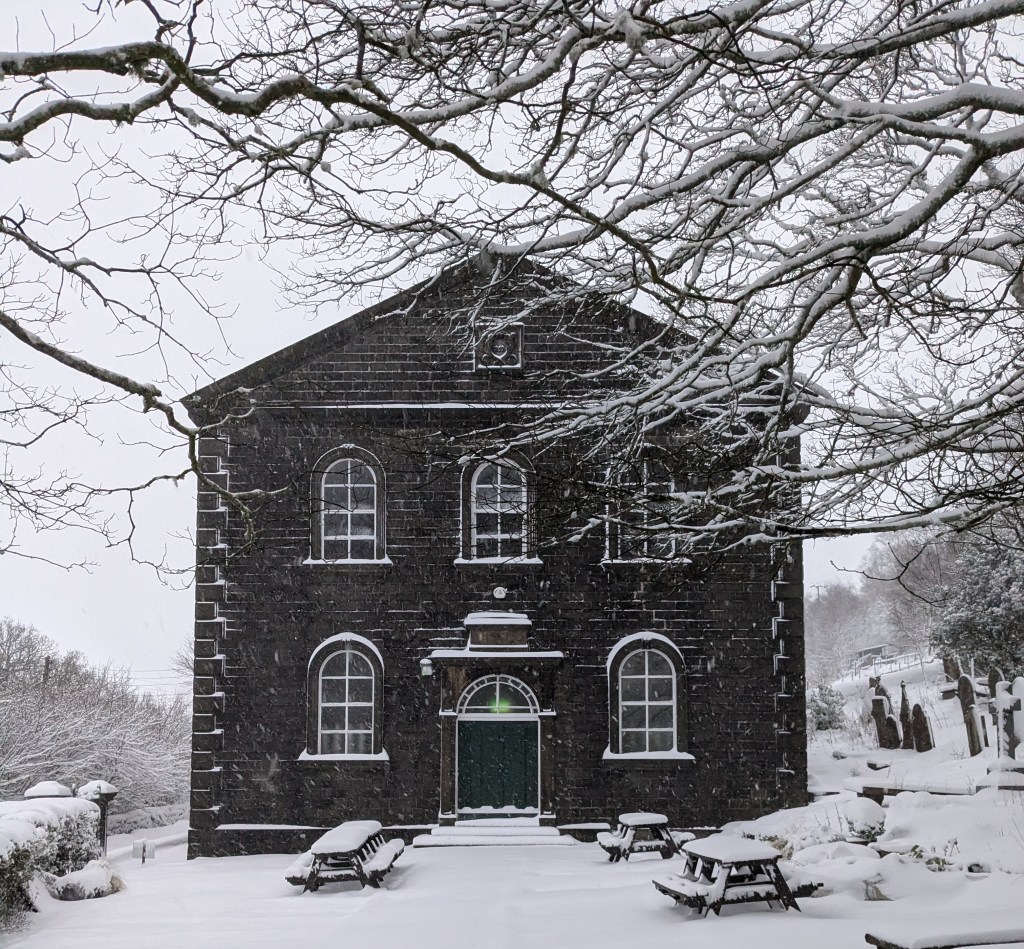
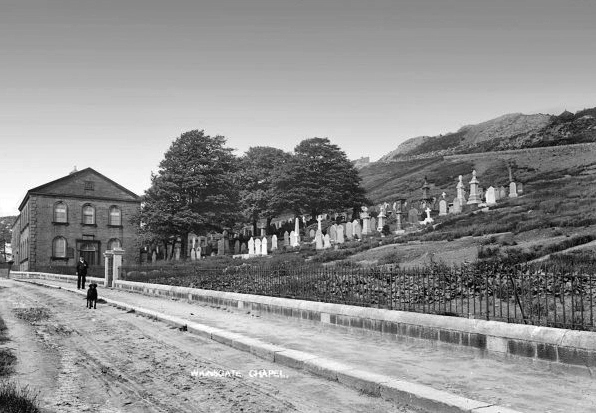
The BURIAL GROUND
History & Context – Plans of the Burial Ground (archive plans from 1849, 1875 & 1905) – The Old Graveyard (Old Yard, first burials, Fawcett Yard, Cousin Yard, Areas A & B) – The New Graveyard – Plot numbering – Rules & Regulations – The Sundial.
TRANSCRIPTIONS, PLANS & INDEX (downloadable pdfs)
Transcriptions of inscriptions on headstones and other memorials – Plans showing the position of graves and the names and dates of those interred or commemorated – Index of names of those interred or commemorated – link to Wainsgate graves on Find a Grave website.
GRAVES & GRAVEDIGGERS
Graves – Chapel Graves – Public or Common Graves – Potter’s Field – Hart Island – Gravediggers.

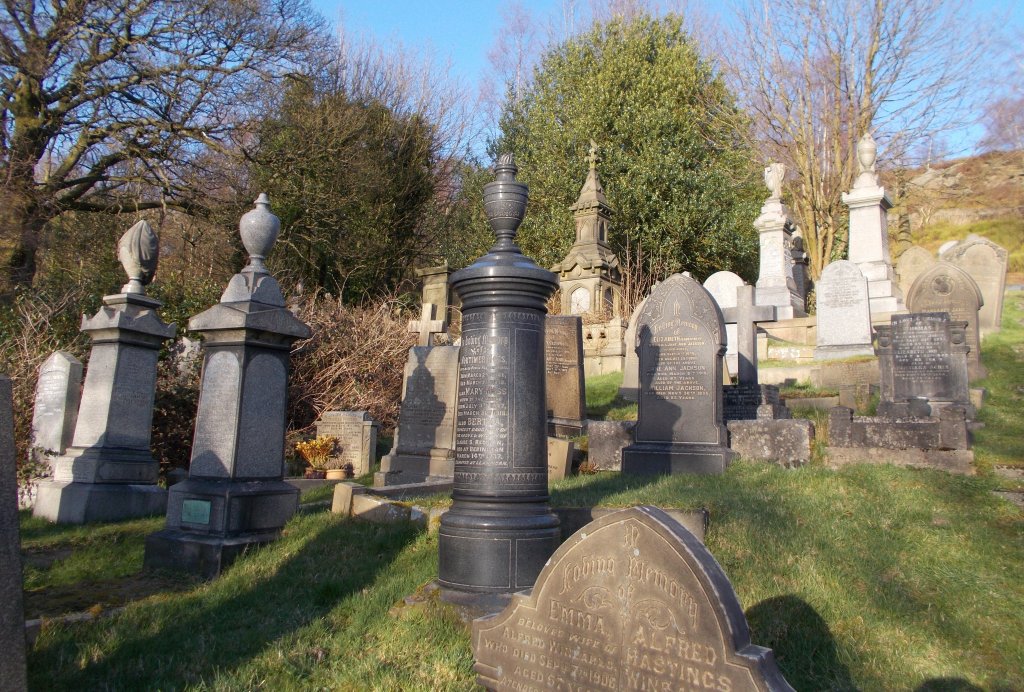
MEMORIALS
Headstones, Tombs and other Graveyard Memorials – Major Memorials – Immortelles – Symbolism – Memorials in the Chapel – Memorial Masons – Carving & Lettercutting.
EPITAPHS
Epitaphs – Modern Epitaphs – Biblical Epitaphs – Hymns & Devotional Poems – Other Epitaphs – Literary Epitaphs – The Churchyard Manual & Lyra Memorialis – An Original Collection of Extant Epitaphs, gathered by a Commercial in spare moments.


The NATURAL HISTORY of the GRAVEYARD
Mark Holroyd’s memoir – Wainsgate Wildlife Survey – The Fauna, Flora, Fungi & Lichens of Wainsgate graveyard.
The stories of some of the people interred or commemorated at Wainsgate: Crossley Ashworth – Elaine Connell – Lewis Crabtree – Bob Deacon – Ben Albert Jackson – Robert Suthers – Hird Lord – Miriam Lord OBE – Joseph Haigh Moss – Dent Parker – Harry Sculthorpe – Arthur Speak – Josiah Wade – David Constantine White – Berhane Woldegabriel – Alan Littlewood – John Clay.
The ‘Lost Souls’ – Every Picture Tells a Story.

MIGRATION
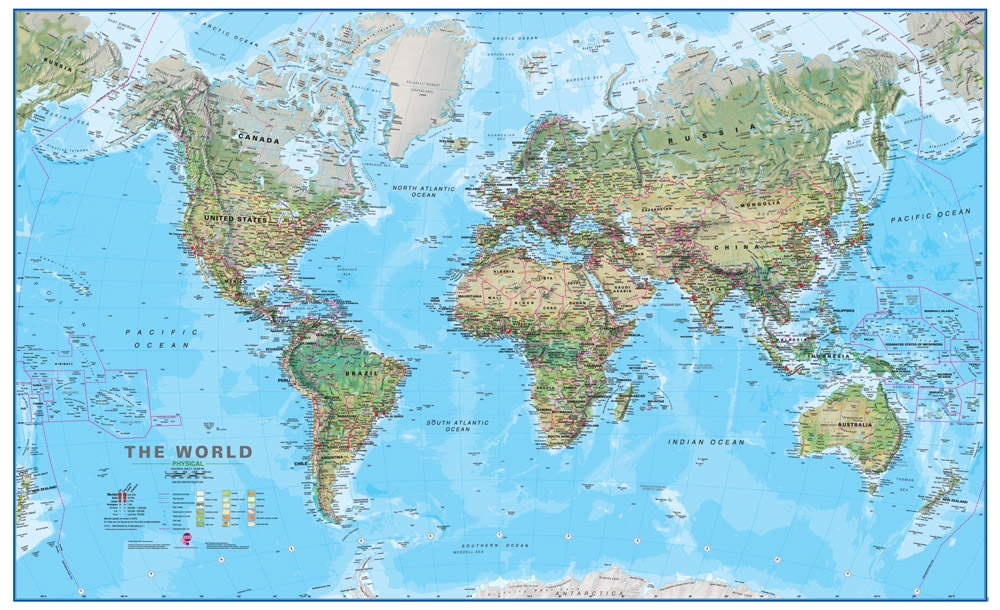
Emigrants & Offcumdens:
Most of the people interred at Wainsgate were born and died within a few miles of Old Town. Some were born elsewhere but ended their days at Wainsgate. Some people were born locally, died far from their birthplace but are remembered at Wainsgate.
FAMILIES
The stories of local families who played an important part in the history of Wainsgate and the local area, and who are interred or commemorated in the graveyard – Mitchell, Cousin, Fawcett, Hoyle, Moss, Riley, Appleyard and others.


MINISTERS
Richard Smith – John Fawcett – John Fawcett jnr & other Fawcett ministers (James, Stephen & William) – William Wrathall – John Parker – Isaac Normington – Mark Holroyd – Peter Scott – John Crook – Jonas Smith – John Bamber – Henry Briggs – George W. Wilkinson – James Jack – Joseph Fielding – Arnold Bingham – David F. Neil – Wainsgate ministers 1750-2001 – Lay Preachers & Deacons – Congregations.
THAT OLD-TIME RELIGION
Baptist Beliefs & Practices – General & Particular Baptists – Immersion Baptism – Baptist Hymns – William Grimshaw – George Whitefield – Dan Taylor – John Sutcliff of Olney – At the Burial of the Dead – The Solemn Covenant of Church Communion – Chartism & Religion – The National Chartist Hymn Book – Baptists & Slavery.

The SUNDAY SCHOOL
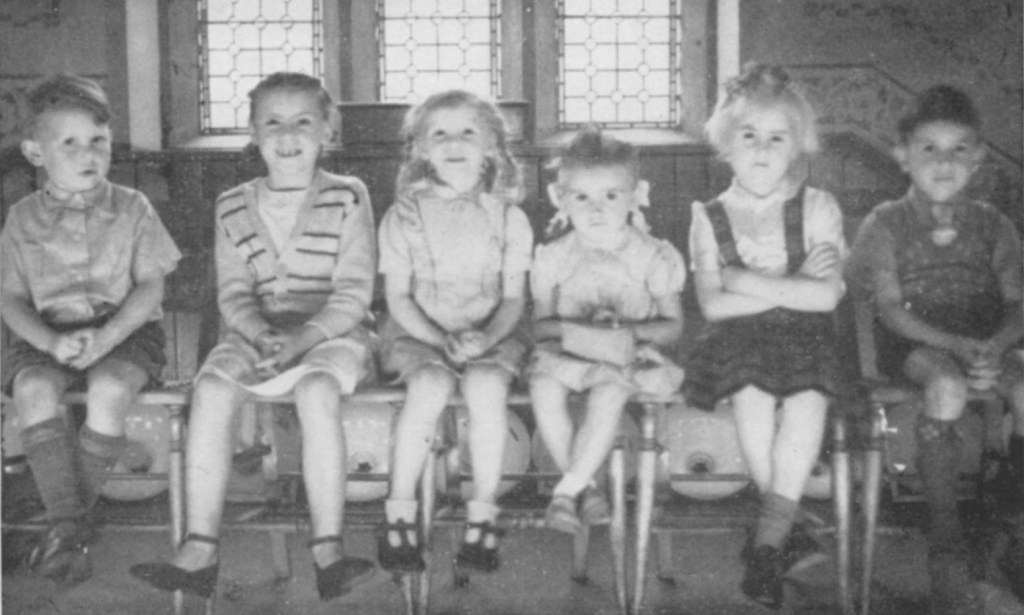
History of Wainsgate Sunday School – Teachers & Officers – Sarah Mitchell – The Haigh family: Thomas, Sarah and Harry – Eddison Sunderland – Hannah Hargreaves – Ethelbert Redman – Martha Harwood – James Hervey Horsfall – Scholars.
MUSICAL WAINSGATE
Richard Ashworth – A.R.Ashworth – Raymond Ashworth – The Choir – 20th Nonconformist Choir Union Festival – Three Fishers Went Sailing – 1951 HMV Recording – John William Parker – George Hall Greenwood – Hird Thomas – the Wainsgate Organ – John Kitchen – The Jenkinsons – The Sacred Harp – other musicians – Wainsgate’s continuing tradition of musical excellence.


WAINSGATE’S WAR DEAD
The stories of the men who died in two World Wars who are commemorated at Wainsgate – The War Memorials – Wadsworth Roll of Honour (1914-1919) – The Battle of the Somme – Tower Hill Memorial – Civilian Casualties – The 1936 Wadsworth Air Crash – Postscript.
THEY ALSO SERVED
Others who served in the armed forces who are interred or commemorated at Wainsgate – The Wainsgate Roll of Honour – Conscientious Objectors & The Non-Combatant Corps – Bantam Battalions – Carrier Pigeon Service – Munitions workers.
REFUGEES
Belgian refugees in Hebden Bridge and Wadsworth in WW1 – Two refugees are buried at Wainsgate: Rosalia Gorrebeeck died in 1914 aged 14 months, Eugene Parmentier died in 1918 age 36 – Berhane Woldegabriel – WW2 evacuees in Hebden Bridge and Wadsworth – Arnold Bingham: evacuation billeting officer.


ACRE MILL
Built by the Hoyle family in 1859 as a textile mill, Acre Mill was taken over by Cape Asbestos in 1939, and produced asbestos rope, pipe lagging and asbestos based textiles until its closure in 1970. It is thought that over 700 people have died, or are yet to die of asbestos related diseases linked to Acre Mill, making it arguably Britain’s worst ever industrial disaster. Some of the victims are buried at Wainsgate.
The WORKHOUSE
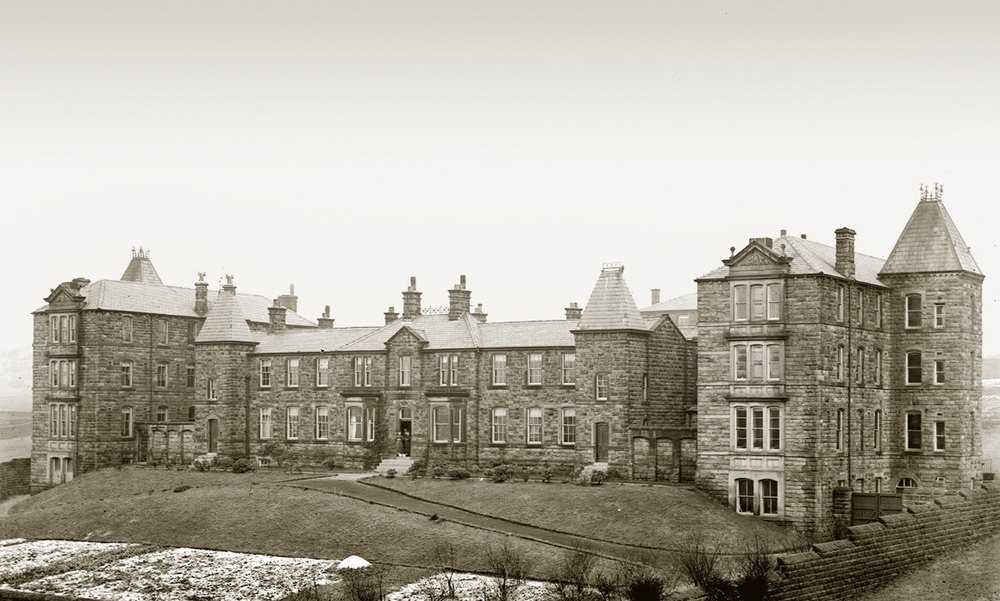
Between 1850 and 1947, more than 30 people who are interred or commemorated at Wainsgate died in a Workhouse, or Public Assistance Institution as they were later known.
The ASYLUM
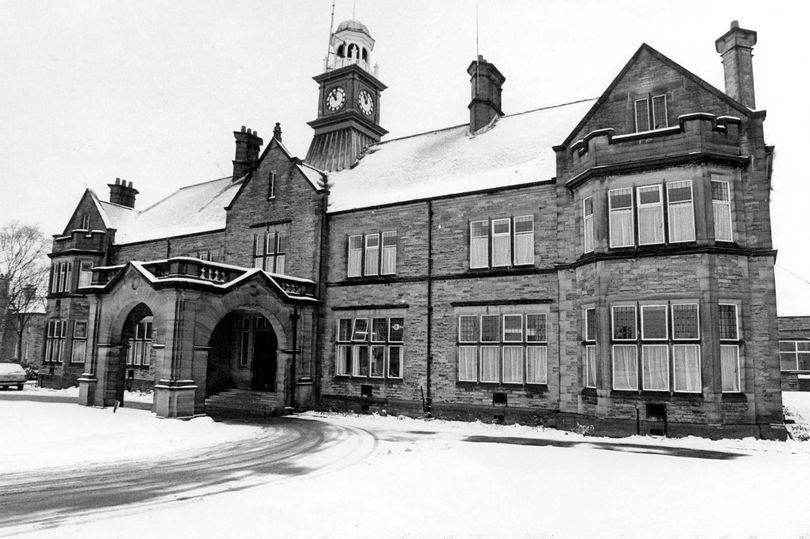
At least 12 people who are interred or commemorated at Wainsgate died in an Asylum or Mental Hospital (as they were then called) between 1877 and 1984.
THIS SPORTING LIFE
Cricket – Old Town Cricket Club – Football – Rugby – Hockey – Tennis – Bowling – Old Town Bowling Club – Golf – Hebden Bridge Golf Club – Knur and Spell / Billets.


MISCELLANEA
Names – Biblical names – Unusual and interesting names – The Men with Two Names – Places – Occupations – Freemasons – The Rechabites – Band of Hope – Cause of Death – Taphophobia & Vivisepulture – Döstädning (Swedish Death Cleaning) – Funeral Potatoes.
The 1920 OXENHOPE CHARABANC DISASTER
On 30th October 1920 a charabanc travelling from Pecket Well to Colne crashed just outside Oxenhope after its brakes failed on the steep descent from Cock Hill. Five local people were killed, and all were buried at Wainsgate: William Devonport Kershaw and his wife Alice Kershaw, William Ogden, William Henry Drake Turner and Percy Brown Roe.


ARCHIVES
Details of all of Wainsgate’s historical documents and artefacts and information about where the original documents can be found. Photographs, scans and transcriptions of burial registers, graveyard plans, grave receipt books and other documents,
BIBLIOGRAPHY
Publications, organisations and websites that have inspired and informed this project, and also some some suggested further reading for anyone with an interest in burial grounds, memorials, funerary practices and related subjects:
Local & General History – Memorials, Transcriptions & Epitaphs – Ministers, Religion & The Sunday School – Wainsgate at War – Refugees – The Workhouse & The Asylum – Further Reading (Churchyards & Cemeteries, Epitaphs, Carving & Lettercutting, Funerals, General).

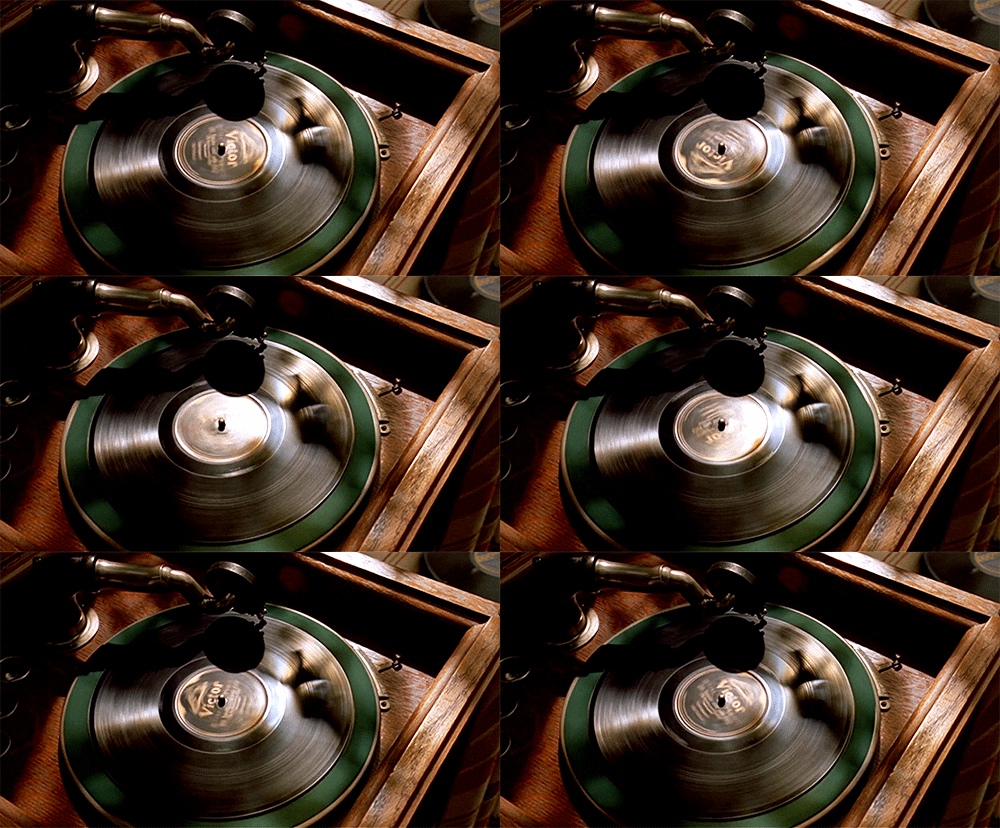
PLAYLIST
Music for funerals, and music that reflects on the meaning of life and the mystery of death – classical, traditional and modern, religious and secular.
It’s not all sad or gloomy: some of the tunes are life-affirming and uplifting, some are moving, some are even quite cheerful.
* * *
* * *
The burial ground at Wainsgate is still open for burials, but space is finite.
One day (hopefully a long time from now) it will be full, and there will be no new residents joining this long established community.
The living come with grassy tread
To read the gravestones on the hill;
The graveyard draws the living still,
But never any more the dead.
The verses in it say and say:
‘The ones who living come today
To read the stones and go away
Tomorrow dead will come to stay.’
So sure of death the marbles rhyme,
Yet can’t help marking all the time
How no one dead will seem to come.
What is it men are shrinking from?
It would be easy to be clever
And tell the stones: Men hate to die
And have stopped dying now forever.
I think they would believe the lie.
In a Disused Graveyard by Robert Frost (1874-1963)
 WAINSGATE GRAVEYARD PROJECT